Key Takeaways
- A CEO should be fit in 10 key digital areas to strengthen both the company and themselves as a leader.
- Best practices in the use and introduction of IT systems are essential — complexity is often increased rather than reduced when new systems are rolled out without proper guidance.
- Distributed and productive mobile working (collaboration) requires professional rollout of devices like iPad, iPhone or Android, including data protection measures and separation of private and business workspaces.
- Microsoft 365 offers many overlapping tools; the recommendation is to pick one consistently — for example, using Planner for task management rather than juggling multiple options.
- The cooperation between assistant and CEO, including digital self-organization, holds significant untapped productivity potential.
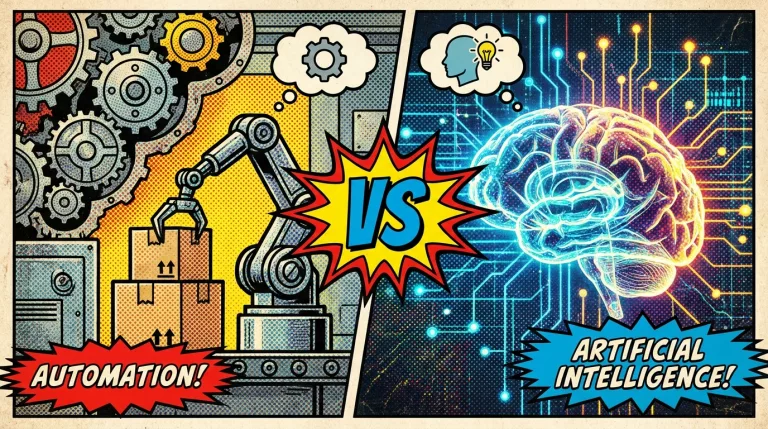
- Process automation — including bridging technologies like RPA (Robotic Process Automation) and API integrations — can unlock major efficiency gains, especially in transition phases.
- Scaling up and down via cloud services and external service providers makes organizations more flexible and resilient.
- Metaverse, virtual reality, and augmented reality (spatial computing) are already relevant for training, internal communication, and customer engagement.
- Artificial intelligence will not replace employees, but employees who use AI will become significantly more productive — and HR must prepare staff for new tasks.
- Future technologies (3D printing, blockchain, Internet of Things, robotics) and the new business models they enable deserve a CEO's ongoing attention.
Introduction
Nice to have you with us again for another episode of Digital4Productivity. Last week I published an episode in the podcast and also in my LinkedIn newsletter on the question of how fit a CEO actually needs to be.
There were a lot of comments, questions and personal feedback. And that's why I would like to continue the whole thing, namely some people have asked which areas of fitness I recommend? So where should a CEO be fit today? And I'll give you my personal top 10 that I think are important to strengthen your company and yourself as a CEO.
1. best practices in the use and introduction of IT systems
Point number 1 and the order is not necessarily in terms of priorities, but really for me this is the top 10 overall. Point number 1 - Best practices in the use and introduction of IT systems. My experience is that many systems are simply imposed on companies. And it is expected that employees will immediately absorb them by osmosis and thus become significantly more productive. And my experience is that there is a lot of potential here for greater productivity, as is the case with Microsoft 365 or iPads, for example. But complexity is usually increased more than it is reduced. And that's why it's important to consistently get rid of old systems, for example. Yes, point number 1: best practices in the use and introduction of IT systems.
2. distributed and productive mobile working (collaboration)
Point number 2 distributed and productive mobile working / collaboration. This includes the interaction between office and home office, but also the topic of mobile working with iPad, iPhone or Android systems. Not just throwing these systems out, but rolling them out professionally so that, for example, central applications are also made available on these devices in a standardized way, so that there is a separation between private and business work areas in order to ensure data protection and data security. So here I often see a lot of opportunities for optimization in point number 2 distributed and productive mobile working / collaboration.
3. productive use of Microsoft 365
The third topic is the productive use of Microsoft 365. Even I, as a Microsoft partner, find it difficult to maintain an overview of this topic, which applications make sense when it comes to Microsoft 365, which applications perhaps make less sense and my recommendation is not to use all three or four or five options for task management in the area of tasks, for example, but to work consistently with the Planner.
Hence point number 3: Productive use of Microsoft 365.
4. cooperation between assistant and CEO
Fourth point: cooperation between assistant and CEO, including digital self-organization. As you know, I am a big opponent of the abolition of assistants. However, my experience is that there is often little productivity here and that there is still plenty of potential to organize this even better digitally. And here's a small example: if you didn't open your mail as CEO in the analog world, then you shouldn't do it in the digital world either. So point 4 - cooperation between assistant and CEO including digital self-organization.
5. process automation
Point number 5: Process automation, including bridging technologies such as interface optimization and robotic process automation or RPA. There is simply a lot of potential here and ideally you should work on the root cause and work with really ideally integrated systems or see how you can build systems in such a way that they communicate with each other automatically via APIs, i.e. interfaces, and this is a typical example of a bridging technology for me, that you use existing systems in transition phases to introduce automation. This is often the case in the banking sector, where you have old systems and semi-automate them using robotic process automation. So fifthly, process automation including bridging technologies such as interface optimization and RPA.
6. scaling up and scaling down
Point number six: Scaling up and scaling down, slash / making the organization more flexible through cloud services and external service providers. I am a great friend of the book "Kopf schläg Kapital" by Professor Faltin. It had a major influence on me when I was building my own company, where I have the opportunity to scale everything up and down, from Zoom calls to TV production. And there are a lot more possibilities in the field of digitalization and, at the latest, with AI. So scaling up and down / making the organization more flexible through cloud services and external service providers.
7. metaverse, virtual reality, augmented reality / special computing
Point number 7: Metaverse, virtual reality, augmented reality / special computing for new ways of training and internal and customer communication. Not just since Apple presented its Vision Pro, but even before that, there were a whole host of possibilities with virtual reality and augmented reality. And even if the Metaverse is a vision that is far from finished, it is important to get to grips with it and to enter the market with existing components. There are also many successful examples on the market. Hence point number 7 - keyword metaverse, virtual reality, augmented reality, special computing for new ways of training and internal and customer communication.
8. use of artificial intelligence
Point number 8: The absolute hype topic is of course currently the use of artificial intelligence in companies. Personally, I'm a fan of using common sense first and then AI. But provided you work with common sense, artificial intelligence is a wonderful tool. I don't believe that AI will replace employees, but I do believe that employees with AI will become significantly more productive. And of course there will also be areas in companies where IT will certainly replace functions in the support area, in the data input area, and it is all the more important here that human resources, colleagues, develop employees so that they have the opportunity to take on new tasks in the company. Of course, it is also very important to demand this from employees. So the typical German fully comprehensive insurance mentality, according to the motto yes, everything must always be regulated accordingly for me, is certainly a corner too short-sighted. So point 8 - use of artificial intelligence in the company.
9. other future technologies
Point 9: Other future technologies that can already be used today, such as 3D printing, blockchain, the Internet of Things and robotics, to name just a few. Of course, depending on your industry, not all technologies will always be relevant for you, but it is always important to have an overview of the key new technologies in order to be able to assess the extent to which new business models are emerging, the extent to which processes can be significantly optimized and the extent to which customer needs can be better met. And ninthly, other future technologies that can already be used today, such as 3D printing, blockchain and the Internet of Things.
10 New business models
And last but not least, point 10: new business models that are only made possible by new technologies. Because AI, for example, means that new business models that used to require a great deal of investment in time and money are now possible. Against the background of point number 10 - New business models that are only made possible by new technologies.
Conclusion
Yes, that's my top 10: use and introduction of IT systems, distributed mobile working, productive use of Microsoft 365, assistance and CEO including digital self-organization, process automation, scaling up, scaling down, spatial computing / metaverse, AI, other future technologies and new business models that are only made possible by new technologies.
Yes, please let me know to what extent you also see it that way, to what extent you see other technical things where you say that a CEO should be fit in this area. And please also let me know which topics you need more information on in this podcast.
If you are a C-level executive and say you need a sparring partner or would like a sparring partner to talk you through these 10 points, that's what I regularly do as a personal IT coach for executives. Feel free to contact me. Simply click on the contact option in the show notes or send me an e-mail to t.jekel@jekelteam.de.
With this in mind, I wish you a bombastic IT fitness and a successful week.
Yours, Thorsten Jekel.
Frequently Asked Questions
Why should a CEO be digitally fit in multiple technology areas?
According to Thorsten Jekel, digital fitness across key technology areas helps CEOs strengthen both their company and themselves as leaders. Staying informed allows executives to identify productivity potential, avoid costly mistakes when introducing new systems, and spot emerging business opportunities before competitors do.
What is the biggest problem when companies introduce new IT systems?
The biggest problem is that new IT systems are often simply imposed on companies without proper guidance, with the expectation that employees will absorb them by osmosis. In practice, this usually increases complexity rather than reducing it, and significant productivity potential is left untapped.
How should companies roll out mobile working with smartphones and tablets?
Mobile working with devices like iPads, iPhones, or Android systems should be rolled out professionally rather than simply distributing the devices. This means standardizing access to central business applications on those devices and ensuring a clear separation between private and business workspaces to protect data security and privacy.
What is the recommended approach to task management in Microsoft 365?
The recommendation is to work consistently with one tool rather than using all three, four, or five available task management options within Microsoft 365. Specifically, Planner is highlighted as the preferred tool for managing tasks in a focused and productive way.
Should a CEO still open their own email?
Thorsten Jekel argues that if a CEO did not open their own physical mail in the analog world, they should not be doing so in the digital world either. Effective cooperation between a CEO and their assistant — including delegating email handling — is a key area where digital productivity can be significantly improved.
What is Robotic Process Automation (RPA) and when is it useful?
Robotic Process Automation (RPA) is a bridging technology used to semi-automate existing systems that cannot yet be fully integrated. It is especially useful in sectors like banking, where legacy systems are in use and full API integration is not yet feasible, allowing companies to introduce automation during transition phases.
How can cloud services and external providers make a company more flexible?
Cloud services and external service providers allow companies to scale operations up or down quickly depending on demand. Thorsten Jekel references the book "Kopf schlägt Kapital" by Professor Faltin as an influence, and notes that digitalization and AI create even more opportunities to build truly flexible, scalable organizations — from Zoom calls all the way to TV production.
Is the Metaverse already relevant for businesses today?
Even though the Metaverse as a complete vision is far from finished, the underlying technologies — virtual reality and augmented reality (spatial computing) — are already being used successfully by companies today. Thorsten Jekel recommends getting to grips with these technologies now, particularly for training, internal communication, and customer engagement, and notes that Apple's Vision Pro has further accelerated awareness of this area.
Will artificial intelligence replace employees in companies?
Thorsten Jekel does not believe that AI will replace employees in general, but he does believe that employees who work with AI will become significantly more productive than those who do not. He acknowledges that AI will likely replace certain functions in support and data-entry roles, making it important for HR to actively develop employees so they can take on new tasks within the company.
What future technologies beyond AI should a CEO be aware of?
Beyond AI, Thorsten Jekel highlights 3D printing, blockchain, the Internet of Things, and robotics as future technologies that can already be applied today. While not every technology will be relevant to every industry, having a broad overview allows a CEO to spot new business models, significantly optimize processes, and better meet customer needs.
Tools & Resources Mentioned
- Microsoft 365 – Recommended suite for productive collaboration; use Planner consistently for task management
- iPad – Highlighted as a key device for mobile working when rolled out professionally
- Artificial Intelligence (AI) – Central future topic for companies; boosts employee productivity when used with common sense
- "Kopf schlägt Kapital" by Professor Faltin – Book that influenced Thorsten Jekel's thinking on building scalable, flexible organizations
- Apple Vision Pro – Mentioned as a catalyst raising awareness of spatial computing and augmented reality for business use