Key Takeaways
- The popular saying "The Americans innovate, the Chinese manufacture, we Europeans regulate" contains truth, but also important oversimplifications.
- The US values a culture of failure and acts quickly — Germans, by contrast, check for risks multiple times before acting.
- China has evolved from a pure manufacturing location ("Made in China") to an innovation hub ("Made by China"), particularly in the electric vehicle sector.
- There is AI innovation in Europe and Germany too — for example, DeepL as a German AI startup and Anthropic as a European company.
- Regulation is fundamentally sensible (data protection, guardrails), but must not displace data security and cyber security — as demonstrated by cyberattacks on 45 schools in Rhineland-Palatinate.
- According to a recent survey, only 6% of companies surveyed have an AI policy — the EU AI Act can therefore serve as a prompt for long-overdue action.
- Companies should implement three measures: revise their governance system, formulate an AI policy, and actively promote AI competence among employees.
- AI competence for employees covers three areas: compliance (adhering to laws), awareness (recognising risks), and empowerment (making well-informed decisions).
- The EU AI Act is being transposed into German law in stages — with phases from February, autumn, and 2026.
- The conclusion: AI regulation can be an opportunity to strategically realign IT and make employees more productive.
Introduction
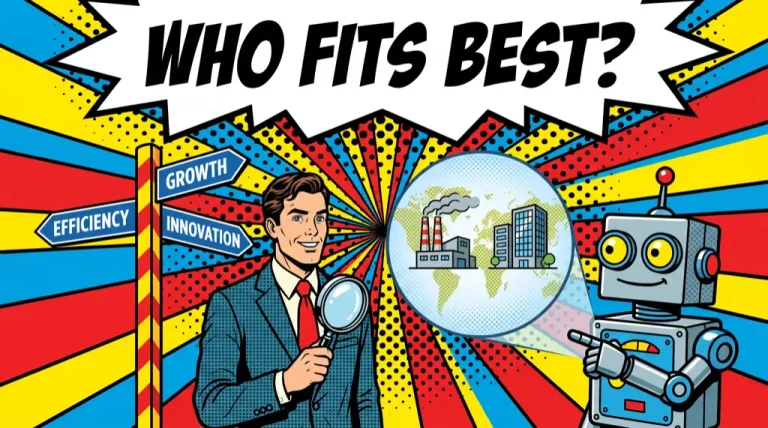
A warm welcome back to TJ's Technology Tuesday. And today I'm starting with a somewhat provocative opener: "The Americans innovate, the Chinese manufacture, and we Germans and Europeans regulate." I hear this phrase again and again at conferences, before or after my talks — sometimes even as an introduction. And I use it myself from time to time. Today we're going to take a closer look: what's true about it? What might not be? And how should we sensibly deal with this topic of regulation? As always, I'll glance at my phone every now and then to check the comments — we're live. So if you have questions or comments, I'm always happy to see them in the chat. Yes, the Americans don't manufacture anything, they innovate — that's usually what gets said first. That's true. What's correct about the Americans is that they have a culture that says: "Let's just get going." Chris Burkert always puts it nicely: they run through the door first without thinking about what's on the other side. We Germans look five times first to check what might be dangerous before we walk through a door.
What the Americans Do Better
Yes, absolutely. And what the Americans are particularly good at, in my view, is that they don't see failure as something negative, but as an important learning step in their development. I think that's a really crucial mindset. China, of course, has a massive labour cost advantage in many areas and was, in the past, the world's factory floor — particularly in the era of robotics, where they still have a significant cost advantage. But we'll come back to that in a moment: they have considerably more going for them. And the third point — yes, Europe and especially Germany. We have a tradition of tending to be cautious first, seeing the risks before the opportunities. But it's also important for me to address what is not accurate. For one, I don't know whether you followed Donald Trump's speech at the World Economic Forum in Davos. At the end, he said very clearly: Come to America — not to innovate, but to manufacture. So Donald Trump has a clear policy of positioning and strengthening America as a production location, or alternatively weakening others through tariff policy. Whether that will be successful, we'll see — but at the very least, it's a clear policy.
When we look at China: yes, "Made in China" — I recently learned from my highly esteemed colleague Gerard von dem BONGAD — is increasingly becoming "Made by China." And there's a great deal behind that distinction. It's a completely different approach: am I manufacturing things that others have developed, or am I saying "Made by China"? I'm dressed particularly smartly today because I'm heading to the New Year's reception of the ZDK — the Central Association of the German Motor Trade — here in Berlin. And of course, the topic of electric vehicles from China comes up there. When I think about how Winterkorn used to mock the panel gaps on Chinese electric vehicles — today, BYD and others show who's setting the standard. And that applies to many other sectors as well. China is being significantly underestimated, in my view. A great deal of innovation is coming from there. And on the other hand: we Germans are always particularly good at talking ourselves down. And many thanks to Gerd Danz for his comment here — he was in China in 2019. He was amazed by how enthusiastically young people there embrace innovation, by the Start-up hubs and outstanding architecture.
Interesting — meeting rooms are named "Menlo Park" and "Palo Alto." Very interesting, I think. There's a hidden admiration there. Many thanks. Digital China and Gerre Dunz — someone who has even captured this in book and lecture form, which is also where I got the title "I Love AI" from. Wonderful, and many thanks. More comments are always welcome. When I visited China for the first time — a few years ago now — I expected to see bicycles everywhere. What did I see? Rows of white Audi SUVs. And according to Gerard, who was just there recently, he now sees only Chinese electric vehicles. A great deal is changing in this space. But it's also important to note again in the German context: we sometimes talk ourselves down. If I look at it now, there's DeepL, for example, a German AI startup, and Anthropic, a European one based in France. Even when you look at the current discussion about new AI models coming out of China — where people keep saying things like "Nvidia is dead" — no. The interesting thing is that there is indeed innovation coming from China and from Europe too.
Yes, the image I always like to use on the topic of safety is this one. And many thanks, Uwe Steinweh, for your addition here. Whenever I look down, I'm checking the comments. The old blanket dismissal of "China is junk" has long since stopped being true. Absolutely right. China now offers very, very high-quality products — not "made in China" but "made by China." And I enjoy this format here — interactive with my phone alongside, a second stream. So many thanks for innovation in the spirit of Gerre Danz and networking in the spirit of Uwe Steinweh. What I often notice when it comes to the topic of regulation is this image of guardrails. I always say: the Americans build the motorway first — four lanes — and then put the guardrails up on the sides afterwards. We Germans do it the other way around: we put the guardrails on the road first, but the road itself is still a bumpy dirt track, and the motorway comes 20 years later. I used to make the joke — I'm from Berlin originally — that I wanted to make a joke about Berlin Airport, but it wasn't finished in time.
It's finished now, of course — but we're particularly good at not delivering large projects on schedule. And if I stick with this image of guardrails: the Americans put up the motorway and then the guardrails afterwards. The Germans put up the guardrails first and the motorway comes 20 years later. And the Chinese print both at the same time using 3D printing. While we laugh at them, they overtake us on the right. And that is, unfortunately, one area where we Germans tend to overdo the "caution" angle. Even when I look at this whole guardrails scenario — we often put them across the road sideways, with no guardrails at all on the left or right. A typical example: I don't know if you read it, but over the weekend there was a report that 45 schools in Rhineland-Palatinate had been brought down by a cyberattack. And here I'd say: while data protection officers in schools are complaining that Teams is the work of the devil and that pupils absolutely must not use this terrible US software — which they might actually need in their professional lives later —
Pay Attention to Cyber Security
— we forget the whole topic of cyber security. I believe we have a significant overemphasis on data protection in Germany, and I'm not at all opposed to data protection — quite the contrary. I think data protection is a guardrail that is absolutely essential. But please don't forget data security, and especially cyber security alongside it. Most organisations are, unfortunately, shockingly negligent in this area. And guardrails are important — just as I always say: which cars have the best brakes? The fastest ones, of course. Which cars have the highest safety standards? The fastest ones. A Formula 1 car has an automatic fire extinguisher built in, and all sorts of other safety systems around it. Against that backdrop, it's always important to remember: yes, regulation is sensible and it's sometimes worth looking at where it comes from. I don't know whether you've read Angela Merkel's book "Freedom." I think it's a very worthwhile read. Dr Merkel is perhaps a little too uncritical of some of her own decisions that were, shall we say, open to debate.
But two areas I found highly interesting in the book — things I hadn't considered before. The first was the section on German reunification and the role of the Treuhand, for example. She experienced this directly as a minister in Helmut Kohl's cabinet, and of course coming from the political movement of the GDR at the time — I found that highly interesting. And the second thing I found highly interesting was the topic of the financial crisis. Personally, I hadn't been fully aware that a large part of today's somewhat overly regulatory approach actually stems from the financial crisis, where losses were socialised while profits were privatised. And of course, that can't be right either. What is also sometimes difficult is that regulation can work like a pendulum — it swings to one extreme. In other words, sometimes it swings too far in the wrong direction. But what is important — and I find this interesting — is that I was last week at our Expert Group on Strategy as part of the KI-Pakt. I can highly recommend it, by the way. It's an association I'm a member of and actively involved in, in the AI Strategy Group.
Only a Few Companies Have an AI Policy
There, for example, we had the Head of AI from the Dr. Oetker Group. I found that highly interesting — we were also exchanging views with the BVR and representatives from the savings bank sector, across companies and industries, about what's already happening and what isn't. And what I found quite interesting in a lawyer's presentation on the AI Act: he mentioned that in current surveys, only six percent of the companies surveyed have an AI policy. And perhaps the enforced engagement with a regulatory topic like this isn't such a bad idea after all. Because, as with any potentially dangerous tool, it's important to think about how to use that tool responsibly within an organisation. Against that backdrop, it makes sense to ensure three things and take a close look at them. The first is the topic of governance — taking a careful, structured look at your governance system. Yes, you probably already have one, and you're extending it to cover AI. The second is to formulate an AI policy, so that there are clear guidelines, and so that employees have clear guardrails and instructions on what they need to do and how.
Promoting AI Competence Among Employees
And the third: promoting AI competence among employees. Here, by the way, I'm always a great supporter of Niels Beumer — he's always the one who rightly points out: "No, there is no obligation for companies to offer AI training. No, that's nonsense." The reality is: you have to ensure that your employees have AI competence. But that doesn't mean you have to be the one to provide it. And regardless of that, this is currently being transposed into German law. The first provisions apply from February, then there are ones that apply in autumn, and the third stage in 2026. But even if it's not strictly legally required, and even if you were to say informally: "I need to make sure I have AI-capable employees, but I don't have to train them myself" — that obviously makes no sense. It makes sense to actively develop the AI competence of your employees. Just as I say, as a personal IT coach for employees: IT fitness is just as important as physical and mental fitness. What are the three areas that should be the focus when it comes to employee competence? The first is compliance — adhering to laws and guidelines.
Conclusion
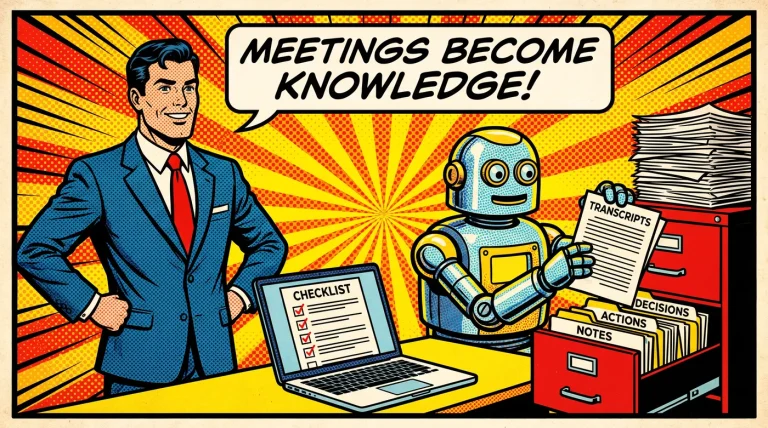
The second is awareness — risk sensitisation. And the third is empowerment — enabling your employees to make well-informed decisions. My conclusion: yes, the AI Act, the EU Act, can be incredibly annoying — but it can also be an opportunity to take a truly strategic look at your IT, realign it, and make your employees even more capable, so that IT becomes a driver of productivity rather than a driver of cost and complexity. Let me check the comments once more — no more coming in. On that note, I'm always happy to receive your comments afterwards too, including suggestions for topics you'd like to see next time. I wish you every success from the bottom of my heart.
Until next time — your Thorsten Jekel.
Update July 2026: The Legislator Has Answered
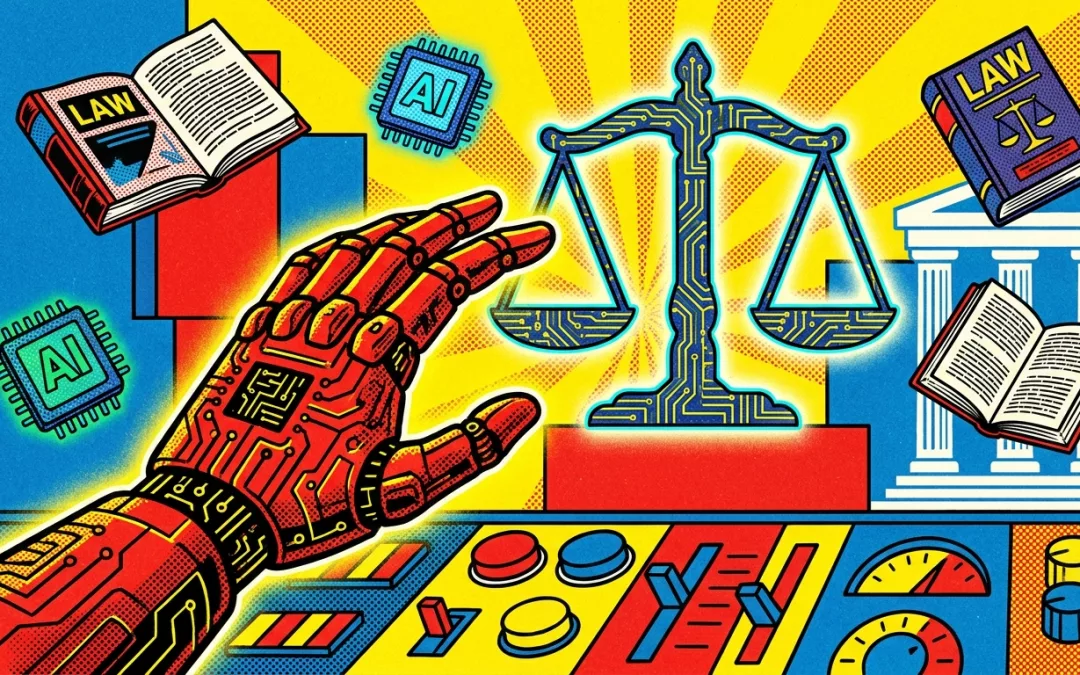
The question in the headline has since been answered by the legislator: the EU AI Act entered into force in August 2024. Bans on unacceptable practices have applied since February 2025, obligations for general-purpose AI models since August 2025, and most remaining rules become applicable in August 2026.
For businesses this means: build an inventory of your AI use cases, classify their risk, and make sure your employees have the AI literacy required by Article 4. Regulation is no longer a debate – it is an implementation task.
Frequently Asked Questions
Is it true that the Americans innovate, the Chinese manufacture, and the Europeans only regulate?
This saying contains a kernel of truth but oversimplifies significantly. The US has a strong culture of embracing failure and acts quickly, while Germany and Europe traditionally act more risk-consciously. However, China has long since evolved from a pure manufacturing location to an innovation hub, and there is relevant AI innovation in Europe as well.
What is the difference between "Made in China" and "Made by China"?
"Made in China" describes the mere manufacturing of products that others have developed. "Made by China," on the other hand, means that China is developing its own innovations and marketing them worldwide — visible, for example, in Chinese electric vehicles like BYD, which are now leading in quality and technology.
Is there really AI innovation in Europe and Germany?
Yes, definitely. Examples cited include DeepL as a German AI startup and Anthropic as a European AI company (based in France). Germany tends to talk itself down on the topic of innovation, even though there are relevant contributions being made.
Why is cyber security so important in the context of regulation?
Cyber security is frequently neglected in Germany in favour of data protection. A concrete example: 45 schools in Rhineland-Palatinate were brought down by a cyberattack, while at the same time the use of tools like Microsoft Teams is being debated for data protection reasons. Data protection and data security must be treated with equal importance.
How many companies already have an AI policy?
According to a survey presented at an Expert Group session of the KI-Pakt, only 6% of companies surveyed have an AI policy. This shows that the majority of companies still have significant catching up to do when it comes to the responsible use of AI.
What three measures should companies take when dealing with AI regulation?
Companies should, first, revise and structure their governance system; second, formulate an AI policy that gives employees clear guardrails; and third, actively promote AI competence among their workforce. These three steps help to meet the requirements of the EU AI Act and to deploy AI productively.
What are the three areas of AI competence for employees?
The three areas are: compliance (adhering to laws and guidelines), awareness (risk sensitisation), and empowerment (enabling well-informed decisions). Companies should ensure that their employees are trained in all three areas.
When does the EU AI Act come into force in Germany?
The EU AI Act is being transposed into German law in stages. The first provisions apply from February, further ones follow in autumn, and the third implementation stage is planned for 2026. Companies should be aware of these deadlines and act in good time.
Do companies have to offer AI training to employees under the EU AI Act?
No, there is no legal obligation to offer specific AI training. However, companies must ensure that their employees possess AI competence. How they achieve this is up to them — though targeted training is the most sensible approach.
Can AI regulation also be an opportunity for companies?
Yes, AI regulation can be used as a prompt to fundamentally rethink and realign a company's IT strategy. Those who consistently build governance, policies, and employee competence will make IT a driver of productivity rather than a driver of cost and complexity.
Tools & Resources Mentioned
- AI / Artificial Intelligence – AI topic area on digital4productivity.de
- DeepL – German AI startup, cited as an example of European AI innovation
- Anthropic – Mentioned as a European AI company