Key Takeaways
- Employees want selective automation: A Stanford study shows that workers do not want AI to take over everything – only part of their tasks is a priority for automation.
- Humans keep the final say: Employees want to stay in control and give the final approval in AI-supported processes.
- Routine before decisions: AI is welcome for monotonous, repetitive work, much less so for complex judgement calls.
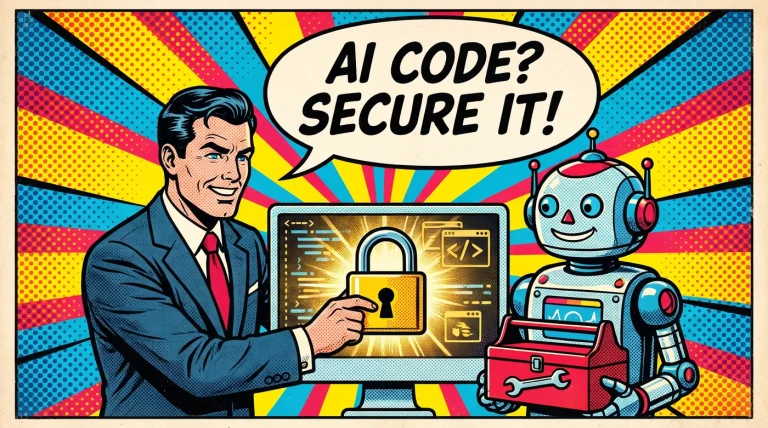
- Fast code needs a security process: Tools such as Lovable build software from prompts, but their security is still under debate.
- The EU AI Act brings training duties: Companies have to train employees in the use of AI to become AI-Act-ready.
- Meeting agents secure knowledge: AI meeting tools turn conversations into documented, lasting results.
Introduction
How much automation can your company really absorb? Many executives want to streamline processes with AI, and many of them run into reservations among their own teams. Is that resistance to progress, or a sensible signal?
A current study from Stanford HAI and the Stanford Digital Economy Lab asked the people who actually do the work. Its message is clear: employees welcome AI for routine tasks, but they want to keep control over results and decisions. Only a part of their work is a real priority for automation.
For me, this confirms a principle I see in almost every project: technology is rarely the problem – people and processes are. More automation does not automatically mean more productivity. What matters is what you introduce AI for and how you introduce it.
What Workers Really Want From AI
The Stanford study "What Workers Really Want from Artificial Intelligence" looks at automation from the employee's point of view rather than from the technology's. Three findings stand out. First, workers do not see every task as a candidate for automation; according to the survey, a considerable share of tasks – 41 percent – falls into the low-priority category. Second, AI is wanted above all for monotonous routines. Third, people want to keep control and give the final approval themselves.
This is valuable information for decision-makers. It tells you where AI will be accepted quickly and where you should expect friction. Sorting emails, preparing first drafts, summarising documents or transferring data between systems are classic candidates. Approving an offer, assessing a customer situation or making a personnel decision are not – at least not without a human in the loop.
Why Control Matters More Than Maximum Automation
Why do teams insist on keeping control? Because they carry the responsibility for the result. If an AI-generated quotation contains a wrong price, the customer does not complain to the AI. Employees know that, and they want a final check before something leaves the house.
Executives should see this not as an obstacle but as a design principle. Processes in which AI prepares and a human approves are faster than purely manual ones and far more robust than fully automated ones. They also build trust step by step. Once a team sees that the AI draft is good in nine out of ten cases, acceptance grows on its own.
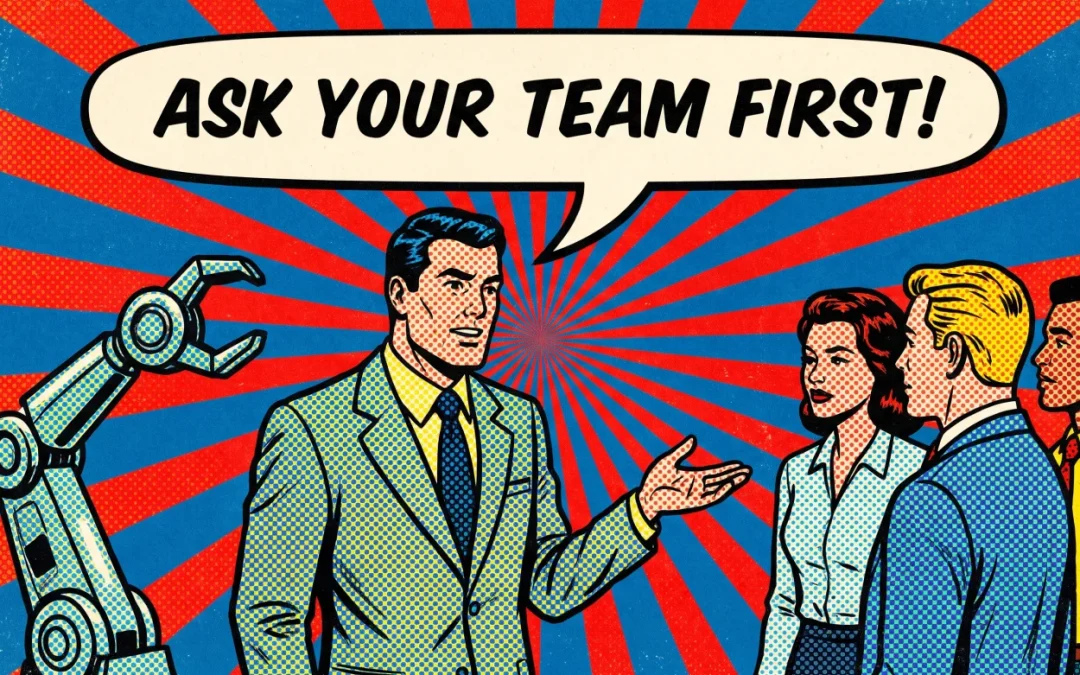
My recommendation: before you automate, ask your people which tasks they would gladly hand over. You will usually get a precise list – and the first quick wins come with built-in acceptance.
Secure Code, Regulation and Lasting Knowledge
The topics of recent weeks fit the same pattern. Tools such as Lovable create software from plain-language prompts in a very short time. Whether this code is secure is still being debated. The answer depends less on the tool than on the process: without security requirements and a structured review, speed turns into risk.
The EU AI Act adds a further requirement: companies have to train employees in the use of AI. Clear guidelines make AI use safer and, when processes are adapted at the same time, even faster. Those who organise training early meet the obligation with far less stress.
Meeting agents show how AI secures knowledge instead of replacing people. They record decisions and tasks, so results stay traceable and responsibilities stay transparent. Here too, the human remains in charge – the AI takes over the tedious documentation.
Processes First, Then AI
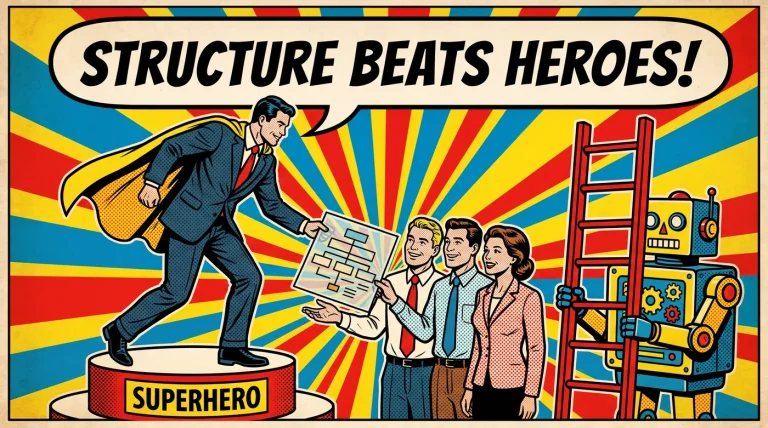
One lesson runs through all of these topics: AI placed on top of weak processes makes them worse, not better. Automating chaos simply produces faster chaos. This applies to email management as much as to software development or to companies that depend on a few individual heroes.
The way out is structure. Define standard processes, distribute responsibility and only then add AI where it clearly helps. Relevance beats spectacle: first clarify the actual need, then choose the right tool and use it sensibly.
Mentioned Tools & Resources
- Stanford HAI study: "What Workers Really Want from Artificial Intelligence" – read the article.
- Lovable: An AI tool that builds software from plain-language prompts; best combined with a structured security review.
- EU AI Act: The European AI regulation, which among other things requires companies to train employees in the use of AI.
- AI meeting agents: Tools that turn meetings into documented, searchable knowledge.
- TJ's Technology Tuesday: A weekly 15-minute digital impulse for executives, every Tuesday from 12:30 to 12:45 (CET), with recordings on LinkedIn.
Frequently Asked Questions
Which tasks should companies automate with AI?
According to the Stanford study, employees mainly want AI to take over monotonous routines. Complex decisions and final approvals should remain under human control. Acceptance rises when the right processes are defined first.
Why do employees want to keep control over AI results?
Because they are responsible for the outcome. A human approval step catches errors before they reach customers and builds trust in the AI over time.
How secure is code created with tools like Lovable?
Not automatically insecure, but it can contain vulnerabilities if security requirements and reviews are missing. A structured review process makes the difference.
What does the EU AI Act require from companies?
Among other things, companies must train employees to use AI responsibly. Clear guidelines increase safety and can speed up adoption when processes are adapted at the same time.
How do meeting agents help to secure knowledge?
They document meetings and make decisions and tasks searchable at any time. No knowledge is lost and responsibilities stay transparent.
Why is it not enough to put AI on top of existing processes?
AI amplifies inefficient workflows. Good results only come when processes are clearly defined and structured first and AI is added afterwards.
Conclusion
Employees are not against AI – they are against losing control. Companies that use AI for routine work and keep people in charge of decisions get faster processes and higher acceptance at the same time.
As a personal IT coach for executives, I support companies with keynotes, training and C-level sparring on iPad, Microsoft 365 and AI – so that automation goes where it truly helps.